
Pinellas County Busted Mugshot Records
An arrest in Pinellas County can come from several hands. Sheriff's deputies make many, but so do officers from St. Petersburg, Clearwater, Largo, and smaller departments. Whoever makes the arrest, the person ends up at Pinellas County Jail. There, PCSO Central Booking and Release opens the county jail intake record. The arresting agency keeps its own incident report, and the Clerk of Court keeps the court file. Three custodians, three different answers.
Booking itself is a physical process. Staff photograph and fingerprint each person, log identifying details, record the charges presented, inventory property, and start classification for housing. That intake photograph is the mugshot. It sits inside the PCSO record even though the public Arrest Inquiry page never displays it.
Inside a Pinellas Booking Record
The official search form gives you more than one way in. Search by name, docket number, booking date, race, sex, or a broad address. Alias and charge options can widen the net. Behind the scenes, PCSO's intake process builds a fuller file. It holds identification material, arrest details, charges, bond, custody status, release data, fingerprints, and photographs. A public result rarely exposes all of it. Protected medical and investigative information stays out of public view.
| Field | What it establishes |
|---|---|
| Name and identifiers | Who PCSO associated with the booking; compare carefully when names match. |
| Docket or booking reference | The key used to connect jail, request, and court searches. |
| Booking date | When county intake was recorded, not when a case was resolved. |
| Charges as booked | The charges presented at intake, which can change in court. |
| Bond and custody data | Recorded release terms or status; it does not promise a release time. |
| Release information | Whether and when the person left county custody, when shown. |
| Booking photograph | The intake image retained by PCSO but omitted from the open roster. |
Not every public result tells the whole story. An arrest narrative, a future hearing date, or a jail unit assignment may simply be absent. The docket or case number is your bridge. It links the jail event to the Clerk's court file. The arresting agency's own case number unlocks the incident report. Keep these numbers straight. That habit stops the mugshot, the police report, and the court outcome from blurring into one document they were never meant to be.
Note: A same-name result needs corroboration through the middle name, birth date, docket, booking date, or other lawful identifier.
Request Pinellas Busted Mugshots
PCSO pulled jail mugshots from public view back in 2014. So the official path to an image today is an individual public-record request. Name both the booking record and the booking photograph in your letter. A sweeping demand for everything about a person just invites extra review, redaction, and cost. Give enough detail to pinpoint the event. Ask for electronic delivery if that suits you.
- Search the PCSO Arrest Inquiry and note the exact name, booking date, and docket reference.
- Open the PCSO Public Records Request Portal and start a narrowly described request.
- Ask for the “Pinellas County Jail booking record and booking photograph,” then add the known identifiers and arresting agency.
- Choose the delivery method and ask PCSO to advise before charges exceed a limit you set.
- Track the response in the portal. Send a separate request to the city police department only if the incident report or case media is also needed.
10750 Ulmerton Road
Largo, FL 33778
727-582-5865
prr@pcsonet.com
No flat price exists for a digital mugshot. No completion time is promised either. Florida law lets agencies charge lawful copy fees, plus a special service charge when a request eats up extensive resources. Even "prompt" access leaves room to locate, review, redact, and produce a record. The agency owes you its own quote, not some other county department's fee policy. The official PCSO records portal lays out the route for requesting an older booking and photograph.
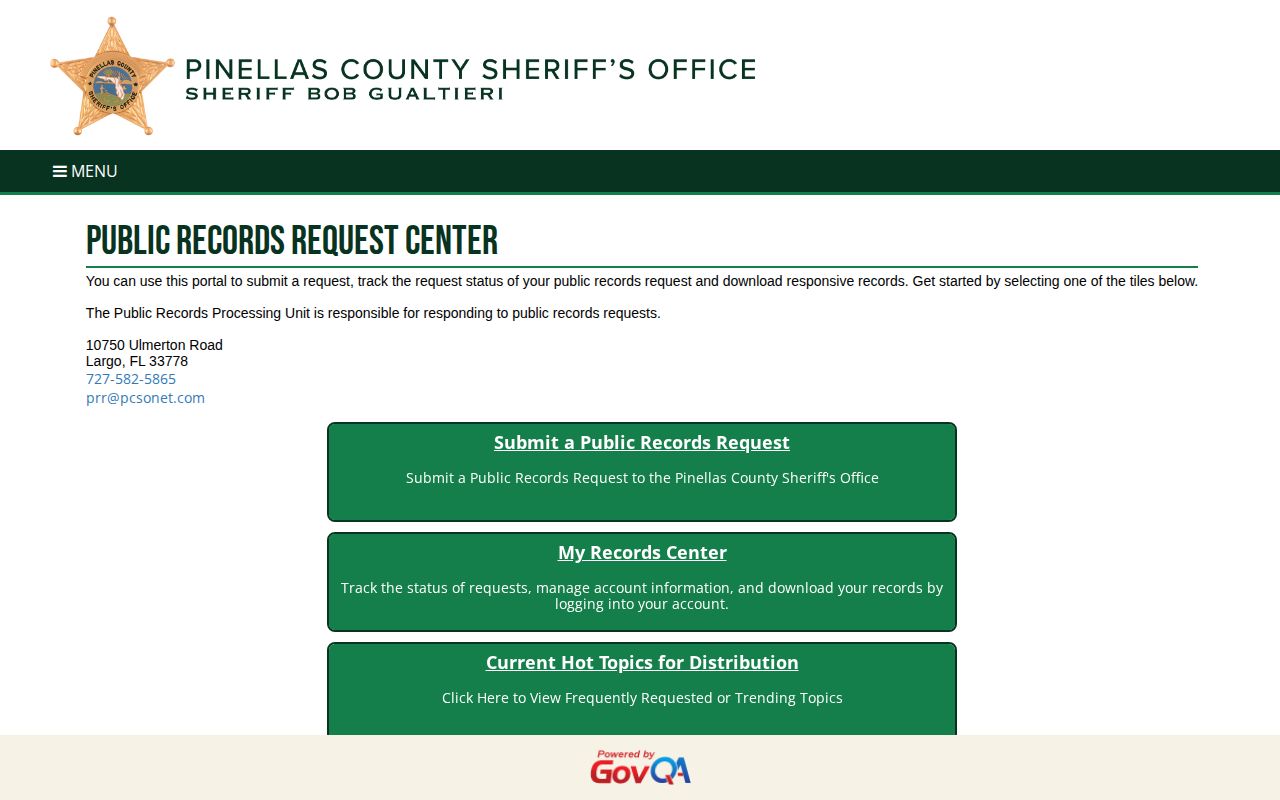
Through the portal you can submit a request, track it, and receive the records, all without any implication that the person named is still in custody.
Florida Busted Mugshot Law
Florida's open-government foundation rests on two pillars: article I, section 24 of the state Constitution and Chapter 119. The statutory definition in section 119.011(12) counts photographs as public records. That status obliges an agency to hand over a nonexempt image on request. It does not force the agency to post images on a website. Pinellas shows the difference plainly: PCSO can keep mugshots off its public roster while still honoring a request route. Exemptions, redactions, sealed cases, court orders, victim protections, and active-investigation rules can still block a particular release.
Florida Statutes section 901.43 targets commercial publishers of arrest booking photographs. A covered publisher may not solicit or accept money to take a covered image down. The subject, or a legal representative, sends the publisher's registered agent a written request by registered mail, with adequate identity proof and the exact photo identified. If the statute applies, removal comes free within 10 calendar days, and the publisher cannot republish the image.
Coverage hinges on the publisher's conduct and business model. Government pages and ordinary editorial reporting do not fall under the statute just for showing an arrest image. Keep your demand and proof of delivery. Never pay a fee Florida law forbids. When section 901.43 covers a publisher, the registered-agent demand is the legal route.
Private sites set their own policies. Recently Booked's free policy wants an email with the record URL, name, arrest date, state and county, reason, and supporting legal documents, listing sealed, expunged, dismissed, inaccurate, wrong-person, juvenile, and duplicate records among its grounds, though accurate current public data may stay. Mugshots.com's free site policy requires its site ID and court documents sent to the addresses it lists, separates removal grounds from a favorable-disposition update, and aims for up to 10 business days without promising it. Check both policies again before mailing anything. No verified free record-removal page exists for Busted Newspaper or Arrests.org, and an advertising opt-out is not record deletion.
The official Florida statute page remains the primary source for the commercial booking-photo rule.
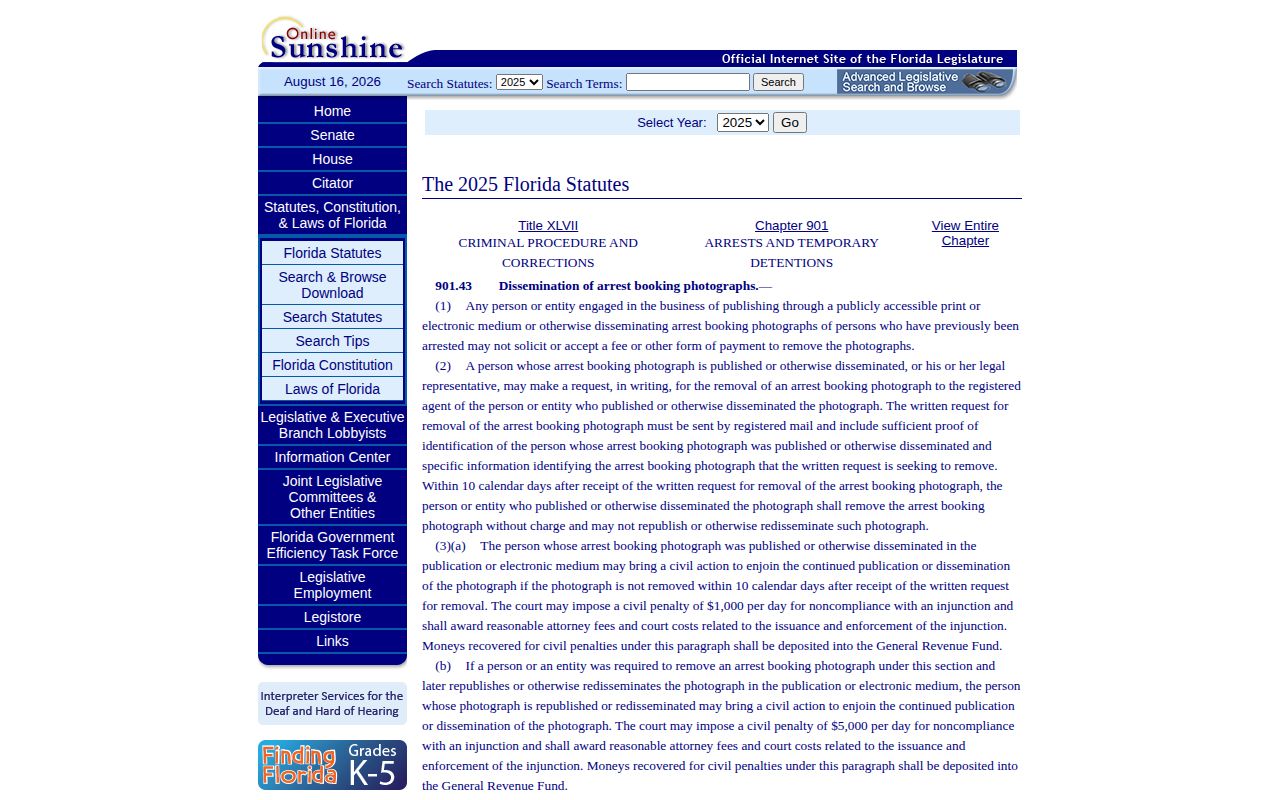
Note: The statute creates a free legal demand process for covered publishers, not a blanket deletion order for every government or news page.
Older Pinellas Booking Records
A record vanishing online is not the same as a record being destroyed. PCSO drops a released person from its public inquiry after 30 days. Yet Florida's GS2 schedule requires booking records to be kept at least one full year past release. The Sheriff's Office can hold them even longer. Audits, lawsuits, pending requests, or simple agency habit all play a part. Nothing pins down a special Pinellas destruction window for booking photographs.
Chasing an older booking? Ask PCSO for the jail record. Then search the Clerk's docket for the matching court case. Court files may sit in digital form, on paper, on microfilm, or in an offsite warehouse. Only when those offices confirm a historical transfer should you turn to the State Archives catalogs. Those catalogs describe what collections exist. They do not promise a viewable image online.
Sealing and expungement sit outside all of this. They take a separate legal path. The FDLE seal and expunge hub starts with a Certificate of Eligibility, though the certificate alone changes nothing. A petition to the court must follow, and the judge decides. Pinellas offers a local Clerk checklist to help. Eligibility depends on the offense, plea, adjudication, history, and any past relief. No quick web test can answer it.
- Booking
- Jail intake that records identity, charges, fingerprints, and a photograph.
- Disposition
- The court result, such as dismissal, plea, acquittal, adjudication, or sentence.
- Sealing
- A court-ordered access limit that does not mean the record never existed.
- Expungement
- A court process that directs covered agencies to treat eligible records under Florida law.
Note: The 30-day web window is a publication rule, not the legal retention period or proof that a record was destroyed.
Find Pinellas County Busted Mugshots
Start your search where the person actually is. Someone freshly booked into the Pinellas County Jail, or still held there, appears in the PCSO inquiry once intake posts. The same tool covers anyone released within the past 30 days. A release older than that calls for a records request to PCSO instead. State prisoners live in the Florida Department of Corrections system. Federal and immigration custody each use their own separate locators.
- Search PCSO by name, docket, or booking date, then use race, sex, alias, charge, or broad address only to refine a likely match.
- Confirm the status and write down the docket or case identifier. A new booking may not appear at once because PCSO promises no exact posting lag.
- Search the Pinellas Clerk Court Records Public View for filings and disposition.
- Request the booking photo from PCSO, since the open roster does not display it.
- Use FDC, BOP, ICE, or another system only when facts point to that distinct custody category.
What does no result mean? Not much on its own. The name may be spelled differently, intake may still be in progress, the release may be more than 30 days old, or access may be limited. Before concluding anything, run the Clerk's search and try the records portal too.
Where Pinellas Busted Mugshots Appear
Go to official sources first. Each one has a clear custodian and a defined stage of coverage, so you know what you are looking at. Secondary sites can serve a purpose, holding an old copy or flagging a recent event, but they cannot tell you who is in custody now or how a case ended. Pinellas invites extra caution here. The Sheriff's public roster shows no images even though PCSO keeps booking photos on file.
| Channel | Photo? | Status and use |
|---|---|---|
| PCSO Arrest Inquiry | No public mugshot | Official current custody and releases within 30 days. |
| PCSO records request | Requestable | Official route for the intake photo and older booking record. |
| Florida DOC search | Often | Official state prison or supervision record, not a new county arrest feed. |
| Pinellas Clerk | Not the mugshot source | Official case filings and final court outcome. |
| Tampa Bay Times Crime and IONTB | Sometimes | Selective news, not a complete arrest list. |
| Busted Newspaper and Recently Booked | Varies | Unofficial county aggregators; data can lag, be wrong, or remain after release. |
| Mugshots.com and Arrests.org | Varies | Unofficial archives; verify identity, custody, and disposition. |
Treat Mugshots.zone with caution. Any Pinellas route there is unconfirmed, so don't assume live county coverage. Aggregator entries can sit stale for months or simply name the wrong person. A timestamp on one of them proves nothing about release status either. News dates can differ from actual booking dates. Match the details before you trust the match.
Busted and Booked in Pinellas
The PCSO Arrest Inquiry does two jobs. It works as a current-custody roster and, at the same time, as a limited search for recent releases. It is not a photo gallery. The persistence rule is unusual: anyone still incarcerated stays visible, and so does anyone released during the previous 30 days. Someone held for months remains searchable the whole time. Once released, that separate 30-day clock starts running. PCSO says records get updated periodically, with no promise of hourly or real-time refresh.
| Search field | How to use it |
|---|---|
| Last and first name | Start here; compare identifiers before accepting the match. |
| Docket number | Use the known jail reference for a tighter result. |
| Booking date | Find intakes on a known date without treating results as a guaranteed daily feed. |
| Race and sex | Refine similar names, not as standalone proof of identity. |
| Alias or charge option | Broaden a query when the ordinary spelling fails. |
| Broad address | Use cautiously; the form advises against entering a full address. |
You need a name, a docket number, or a booking date to begin. Sorting and response-count controls help when results run broad. When a likely record surfaces, confirm the status, charge, and identifiers, then head to the Clerk for the case itself. Has the entry aged out? The records portal takes over from the roster. Either way, getting the photo still means making a request.
Note: “Updated periodically” is PCSO's safe cadence; no fixed upload interval supports a claim that every intake appears at once.
Recent Pinellas County Busted Bookings
Pinellas publishes no official 24-hour, 48-hour, 72-hour, weekly, or downloadable booking feed. A booking-date search in Arrest Inquiry can approximate a same-day query, but PCSO never promises a complete chronological log or a fixed intake delay. Police news releases and the county Crime Viewer pick and choose incidents. Neither stands in for a full named booking feed.
The 30-day rule gets misread constantly. It means a released person stays visible for 30 days after walking out. It does not turn the portal into a list of the last 30 days of arrests. Someone booked months ago but still held remains searchable. Someone held briefly drops off 30 days after release. For anything older, request the record from PCSO and follow the Clerk docket for later court action.
Can a booking-date search show who got busted last night? It can. The results cover records matching the date you pick, once they reach the system. PCSO promises no completion time, though. When timing matters, check back. Then verify with the records unit.
Pinellas Arrest Alerts and Apps
Skip the app store if you want PCSO booking photos or a county jail app. Neither exists in verified form. What Pinellas does offer are narrower official tools. VINE notifies victims when someone is booked into or released from the Pinellas County Jail. Alert Pinellas pushes emergency and community messages by phone, text, or email, free for several locations. PCSO Active Calls shows incident types and locations. None of them confirms a named booking or fills in the missing roster photo.
Two state and federal tools get mistaken for county apps. The FDLE Mobile App handles wanted-person and alert searches. P3 Tips collects anonymous crime tips. Neither tells you jail status, and blending warrants, tips, and custody into one channel just produces bad answers. For real custody status, use PCSO Arrest Inquiry or call the jail. For a photo, file the PCSO records request.
VINE's phone line is 877-846-3435. Remember that these services answer notification questions only. What happened in court is a separate matter, and the Clerk remains the source for that.
Pinellas Mugshots After County Custody
Someone out of county custody calls for a different tool. The Florida Department of Corrections inmate search becomes the relevant one. It covers current inmates, released inmates, supervised offenders, absconders, and escapees. A profile can include an offender ID image, DC number, demographics, status, facility, offense, sentence, and release details. It does not mirror the Pinellas County Jail. An arrest in Pinellas yesterday puts no one into FDC.
Search with the DC number when you have it. Confirm which FDC database produced the match. "Released inmate" there means release from state corrections, not from the county jail. Missing a needed state record? FDC runs its own public-record portal. No flat photo fee or fixed turnaround has been verified.
Federal systems sit apart entirely. The Bureau of Prisons locator covers federal inmates from 1982 onward and publishes no photographs. ICE's detainee locator covers some current immigration detainees, also without mugshots. USMS wanted pages are selective fugitive notices, not a federal jail roster. A miss in one system tells you almost nothing about another.
Pinellas Booking Bond Timing
Anyone taken to the Pinellas County Jail ordinarily gets a first appearance. The 2026 Pinellas bond schedule guides law enforcement and treats each offense separately. It does not bind the judge. Some statutory categories require first appearance before any release. So a bond figure on a jail line can't predict when someone walks out.
Payment mechanics, court review, holds, and jail processing all shape what happens next. Think of the schedule as a starting point for release decisions, not a countdown clock. Check live custody status with PCSO. Confirm the court order through the Clerk instead of promising a release time.
After a Pinellas County Bust
When the roster ends, the Clerk's Court Records Public View picks up the thread. Search by name, case number, citation, attorney, or calendar. Add a middle name and birth date to separate criminal from traffic matches. The docket can reveal filings, hearings, amended charges, prosecutor decisions, pleas, adjudication, sentence, dismissal, and closure. Some protected cases and documents stay offline.
The Pinellas Clerk public court view is the official bridge from an arrest story to its later disposition.
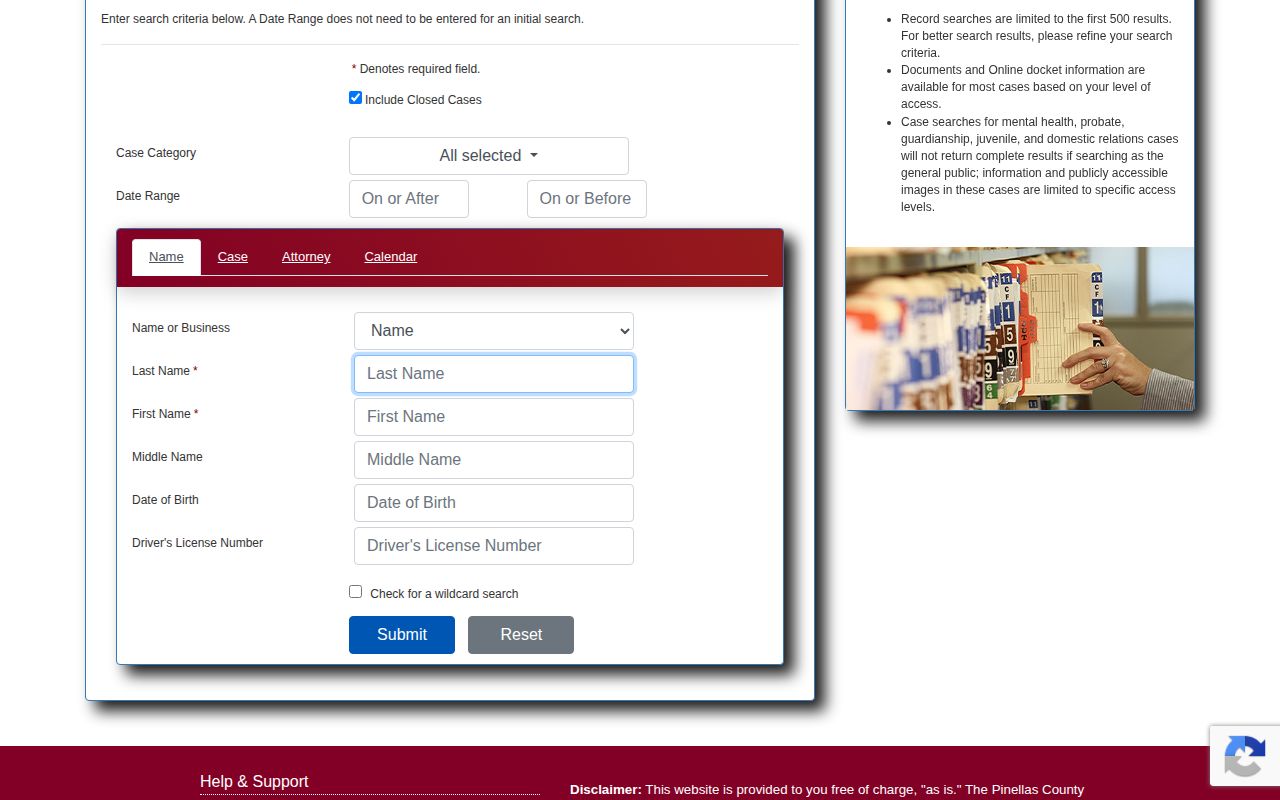
A roster charge is only the opening line. The court search supplies the case context, and its outcome can differ sharply from what the booking record first showed.
Note: The jail record tracks custody; the court docket tracks prosecution and disposition, so both are needed for a sound account.
Withheld Pinellas Arrest Records
Florida treats juvenile information as confidential under section 985.04. That statute still carries specific exceptions. Custodians may also decline to publish certain juvenile booking photos electronically, even where some information could be released. So it's wrong to say every juvenile record is always sealed. Nothing vanishes at one magic age either.
FDLE lays out juvenile retention and expunction paths that turn on age and statutory qualifications. Judicial and diversion routes differ. Victim protections, active investigations, sealing or expungement orders, and other exemptions can affect an adult record too. The custodian applies current law to the actual file. A missing result doesn't mean something was hidden.
Busted Mugshots Across Pinellas Cities
Pinellas books everyone centrally. Even its biggest cities, which run their own police departments, send arrests to one system. Official 2024 agency totals credit St. Petersburg Police with 6,270 arrests, Clearwater Police with 3,544, and Largo Police with 2,104. Treat these as agency-attributed arrest counts. They are not unique-person totals or a full county booking figure. Still, they explain why so many people search by city. No separate city jail systems exist because of them.
- St. Petersburg Busted Mugshots covers SPPD's selective news releases, city records process, and the handoff to PCSO booking.
- Clearwater Busted Mugshots explains the county seat's three-custodian path through Clearwater Police, PCSO, and the Clerk.
- Largo Busted Mugshots separates Largo Police incident reports from the county jail intake record.
None of the three departments posts a complete arrest blotter covering a fixed window. Their selective news and incident tools can't replace the county inquiry. Get the municipal incident report from the arresting city, the booking record and intake photo from PCSO, and the final outcome from the Clerk.